Augos Factory / Proof / Processing plant
Case study · Food and beverage
One belt type cost 125 hours in a quarter. Six quarters later, it cost 10.
The section lost 483 hours to unplanned stops in one quarter. Once every breakdown named the part that failed, one belt type stood out.
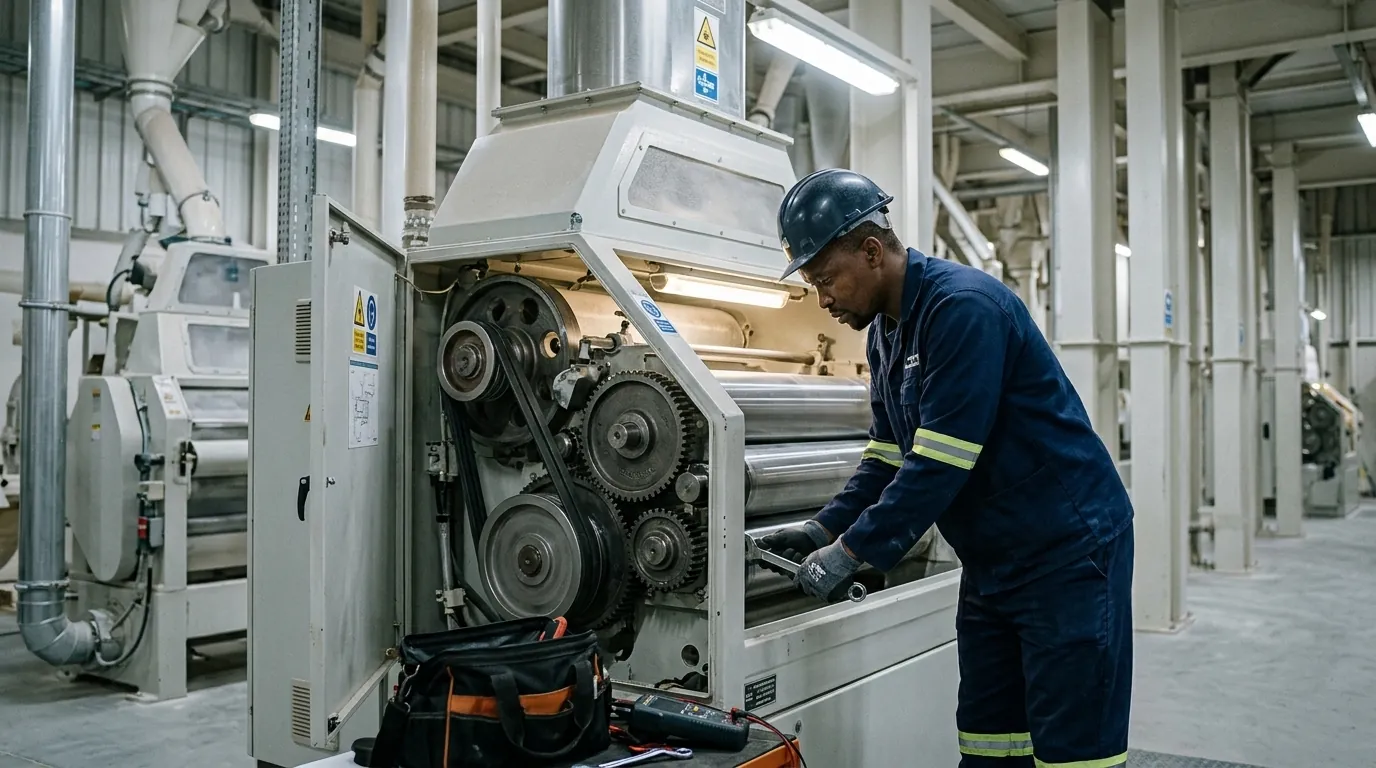
The problem
483 hours, and no clear place to start
In one quarter, the processing section lost 483 hours to unplanned stops. Breakdowns, blockages and stops for full bins all competed for attention.
With that much downtime from that many causes, maintenance kept reacting to the latest stop. Nobody could say which fix would win back the most time.
What the record showed
One part cost a quarter of the downtime
Every breakdown was tied to the machine and the part that failed. Sorted by hours lost, one belt type on the main machines came out on top.
| Quarter 1 | Hours |
|---|---|
| Unplanned downtime, whole section | 483 h |
| Lost to one belt type | 125.1 h |
| Share of the section's unplanned downtime | 26% |
Almost all of it, 124.7 hours, came from one failure. A belt broke and kept one machine down for more than five days.
The suggestion
Start with the belt. Find out why it failed, and make sure a failure can't keep a machine down for days again. Then check the record every quarter.
Source: Augos platform, Downtime Report and Performance Overview. One anonymised processing section, quarters 1 to 7. Site, products and people removed.
The fix
Four steps, in the plant's own order
Name the part
Every breakdown is tied to an asset and the component that failed, not just the area of the plant.
Rank by hours lost
One belt type cost 125.1 hours in the quarter, more than any other part.
Act on the belt
With the cost on the table, the plant acted on that belt type first.
Check it every quarter
The record shows straight away whether the belt is back.
Holding the standard
Six quarters later, the belt barely stops
| Measure | Quarter 1 | Quarter 7 |
|---|---|---|
| Hours lost to that belt type | 125.1 h | 10.2 h |
| Mechanical and electrical breakdowns, that section | 229.5 h | 159.8 h |
| Breakdowns logged by name | 82 | 145 |
The belt type cost 10.2 hours over 4 stops in quarter 7. Mechanical and electrical breakdown hours fell too, even though the plant now logs more breakdowns by name.
With the part named, maintenance could act on it, and the record could check that it worked.
Method
- Source: Augos platform Downtime Report and Performance Overview.
- Periods: quarters 1 and 7 of monitoring.
- Section: one processing section, every stop timed by the sensor and given a reason at the terminal.
What this case leaves out
- No rand value: the plant hasn't shared its sales values, so the case reports hours.
- The section's total unplanned downtime rose over the same period. Full bins and a lack of raw material drove that, not breakdowns. This case claims no section-wide gain.
Measured figures only, as the platform recorded them.
Questions
This case, answered
Was the 125.1 hours one failure?
Almost all of it. One belt failure kept a machine down for more than five days. That is why it mattered: one part could stop a machine for days.
Did the section's total downtime fall?
No. Full bins and a lack of raw material pushed total downtime up. Breakdown hours, the part maintenance controls, fell from 229.5 to 159.8 a quarter.
Why did it take Augos?
A stop record that names only the area can't point anyone at a part. Once every breakdown named its asset and component, the plant could rank parts by hours lost, act on the worst, and check that it worked.
Find losses like these on your own line.
Thirty minutes with a manufacturing specialist, on your own lines and products.
- Every stop timed and given a reason
- Read by your own team
- Prices in rand, ex VAT
A manufacturing specialist replies within two business hours to set a 30-minute call.