Augos Factory / Proof / Tea-packing plant
Case study · Food and beverage · Western Cape
Three identical lines. One made half the output.
Same machines, same blends, same operators. In one month, line 2 packed about half as many units as line 1. The stop record put 61.4 hours of line 2's lost time on one fault code, and none on line 1.
The situation
Identical on paper, not on the floor
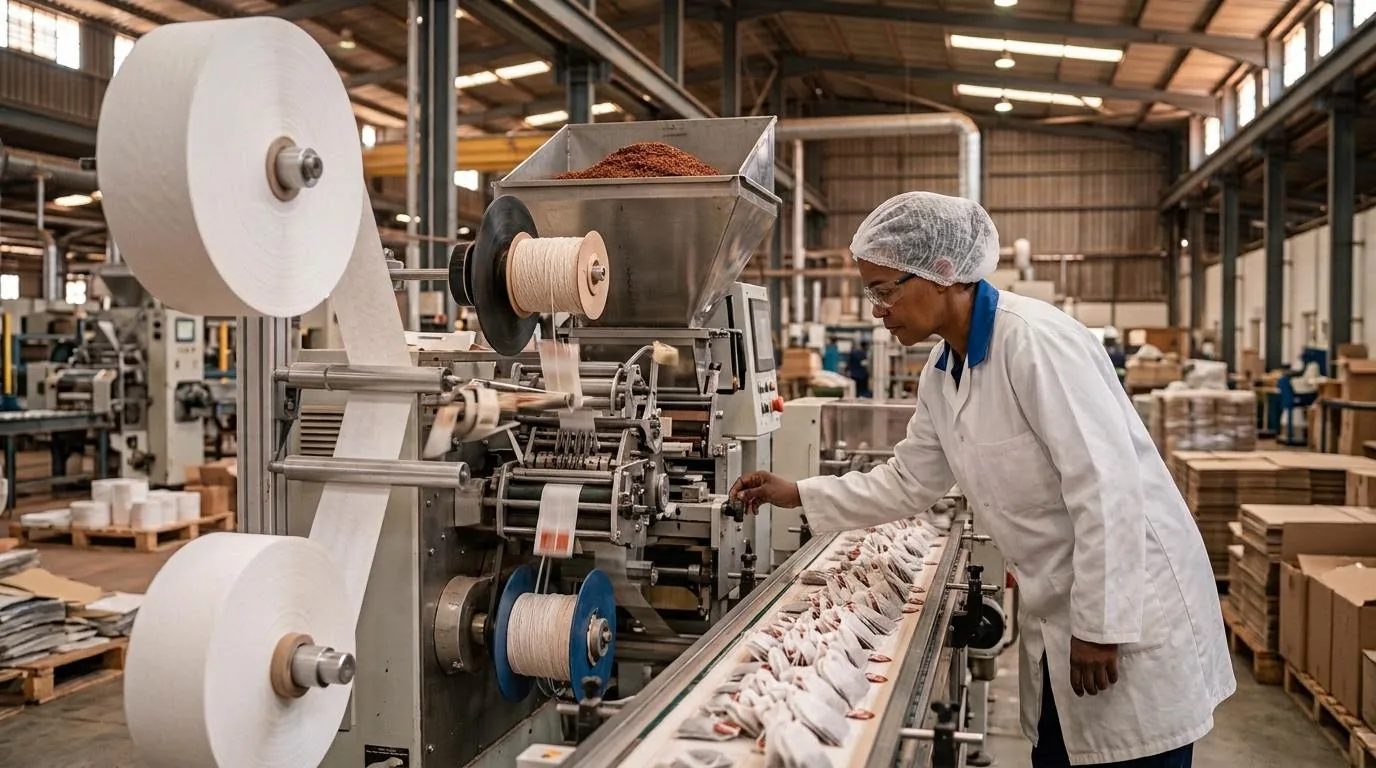
Three tea-packing lines sit side by side. They run the same blends with the same group of operators. Each has one sensor and one Augos Operator Terminal, and operators give each stop a reason at the line.
In one month in 2026, line 1 ran at 56.2% OEE. Line 2, its sister, ran at 31.7%.
What the record showed
One fault code, one line
Hours lost to one fault code (knot holes), one month:
| Line | Hours lost to knot holes |
|---|---|
| Line 1, the best of the three | 0 h |
| Line 2, the line that lagged | 61.4 h |
| Line 3, the middle line | 1.1 h |
One code
74% of line 2's breakdown time came from that one code. Line 1 lost nothing to it, and line 3 just over an hour.
Line 1 against line 2, the same month:
| Measure | Line 1 | Line 2 |
|---|---|---|
| OEE | 56.2% | 31.7% |
| Availability | 78.3% | 51.6% |
| Available time turned into effective production | 46.9% | 31.3% |
| Units packed, approximately | 1.67 million | 855,000 |
Source: Augos platform, Downtime Report and Performance Overview. Three anonymised tea-packing lines, one month in 2026. Site, products and people removed.
Who owns the gap
The machine, not the people
The same operators worked all three lines. On line 2 they met the same fault again and again, and worked around it.
Some restarted the line faster than others between faults, but none could stop it recurring. A mechanical fault is the maintenance team's to recover.
What the record pointed to
Two steps the report recommended
Match line 2's knotting unit to line 1
Line 1 lost no time to the same fault that month. The report proposed bringing line 2 to line 1's stable conditions.
Write down the fastest recovery
Some operators restarted line 2 faster between faults. Their method can be written down and taught while the fix goes in.
Method
- Source: Augos platform Downtime Report and Performance Overview, one month in 2026.
- Lines: three tea-packing lines with the same machines, blends and operators.
- Stops: timed by the line sensor, with reasons given at the terminal.
- Units: counted by the sensor on each line.
What this case leaves out
- No rand value: the plant has not published its cost per paid hour, so the case reports hours and units.
- One month only. A later month will be added when the plant shares it.
Measured figures only, as the platform recorded them.
Questions
This case, answered
Were the three lines really identical?
Yes. They run the same machines, the same blends and the same group of operators. Each has one sensor and one Augos Operator Terminal, and operators give each stop a reason at the line.
Was the gap down to the operators?
No. The same operators worked all three lines. Some restarted line 2 faster than others, but none could stop the fault recurring. A mechanical fault is the maintenance team's to recover.
Why is there no rand value?
The plant has not published its cost per paid hour, so the case reports hours and units only. A rand value can be added when the plant supplies its rate.
Find losses like these on your own line.
Thirty minutes with a manufacturing specialist, on your own lines and products.
- Every stop timed and given a reason
- Read by your own team
- Prices in rand, ex VAT
A manufacturing specialist replies within two business hours to set a 30-minute call.